What the P0171 Error Means
The P0171 (System Too Lean Bank 1) error is a standard OBD2 code. It indicates that the Engine Control Unit (ECU) has detected a too lean fuel-air mixture in the first cylinder bank. A 'lean' mixture means insufficient fuel relative to air in the combustible mixture.
Typical symptoms:
- Engine misfire at idle or under load.
- Increased fuel consumption (sometimes).
- Loss of power, vehicle sluggishness.
- Black or dark gray exhaust fumes.
- Check Engine light illumination.
The code applies to gasoline engines with EOBD/OBD2 systems (vehicles from approximately 1996 model year onward).
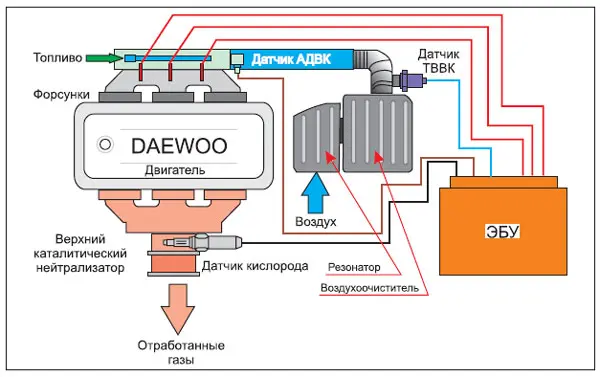
Diagram of the engine control system with MAF and oxygen sensors, illustrating the air and fuel path in the context of the P0171 code.
Main Causes
The problem is almost always due to uncontrolled entry of excess air into the engine or insufficient fuel delivery. Primary causes:
- Vacuum leaks. Gaskets, hoses, intake manifold seals, EGR valve, oil filler neck seal. Air enters bypassing the Mass Air Flow (MAF) sensor.
- Faulty or contaminated MAF sensor. The sensor underreports air flow, and the ECU under-delivers fuel.
- Fuel system issues: low pressure (fuel pump, filter, regulator), leaking or clogged injectors.
- Faulty oxygen (O2) sensor before the catalytic converter. The sensor provides false readings, and the ECU corrects the mixture in the wrong direction.
- Incorrect data from the coolant temperature sensor. If the ECU 'thinks' the engine is cold, it may incorrectly adjust the mixture.
- Issues with the Positive Crankcase Ventilation (PCV) system. A stuck PCV valve draws excess air.
- Severely clogged air filter (less likely, but possible).
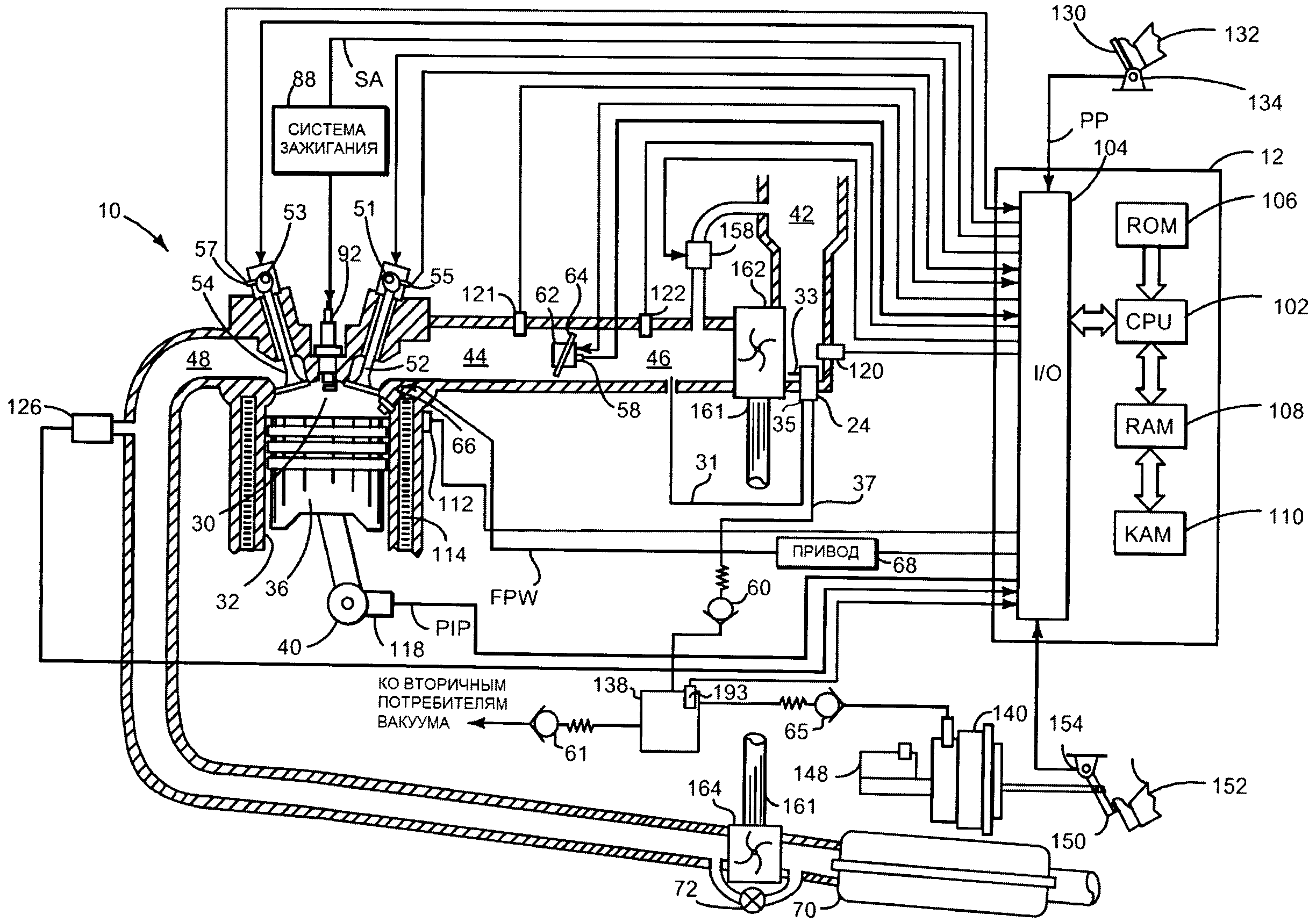
Diagram of typical vacuum leak points in the internal combustion engine intake system.
Diagnostics and Repair
Step 1: Read and Clear Error Codes
Connect an OBD2 scanner, read all codes. Record them. After each repair step, clear the errors and check if the P0171 code returns. This will help isolate the problem.
Step 2: Locate and Fix Air Leaks
This is the priority step. Most P0171 issues are caused by leaks.
- Visually inspect all vacuum hoses for cracks, stiffness, and proper connection.
- Check the oil filler neck seal. With the engine running, there should be no noticeable airflow around the neck.
- Inspect the intake manifold gasket for signs of dried dirt or cracks.
- To find small leaks, you can carefully introduce a small amount of propane into potential leak points (hoses, manifold joints). If the engine RPM increases slightly, the leak is found. Caution: Work in a well-ventilated area, away from ignition sources, propane is flammable!
Step 3: Inspect and Clean the MAF Sensor
- Carefully remove the mass air flow sensor.
- Inspect the sensing elements for contamination, oil spots, or damage.
- Clean it with a dedicated MAF sensor spray. Never use WD-40, gasoline, or acetone! Spray, then let it dry for 10–15 minutes.
- Reinstall. If the error returns, the sensor is likely faulty—replace it.
⚠️ Important: When replacing the MAF, use an OEM or high-quality aftermarket part. Cheap copies often provide inaccurate readings.
Step 4: Evaluate the Fuel System and Oxygen Sensor
- Measure fuel pressure. Connect a pressure gauge to the test port on the fuel rail. Normal pressure for most engines is 3–4 bar at idle. Low pressure indicates an issue with the fuel pump, regulator, or clogged filter.
- Check the fuel injectors. Significant injector leakage causes pressure drop. Testing can be done on a bench or with a pressure gauge.
- Diagnose the O2 sensor. Connect a scanner and view the Long-Term Fuel Trim (LTFT) and Short-Term Fuel Trim (STFT) values. With a lean mixture, these will be positive (ECU adds fuel). If values are consistently high (>+10–15%), the problem is confirmed.
- Sensor replacement. If trims remain high and there are no air leaks, replace the oxygen sensor before the first catalytic converter (Bank 1, Sensor 1).
Step 5: Check the PCV Valve and Air Filter
- Air filter. Simply replace it if it's severely clogged.
- PCV valve. Locate it on the valve cover or cylinder block. With the engine running, there should be a suction effect. A valve stuck open draws excess air—replace it. It's an inexpensive part.
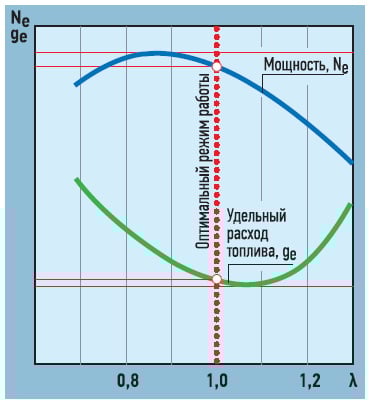
Example graph of trim coefficients (STFT/LTFT) when diagnosing a lean mixture with code P0171.
Prevention
- Regular maintenance: Change the air filter, fuel filter, and spark plugs on schedule.
- Quality fuel: Use reputable gas stations to avoid contaminating injectors and sensors.
- Repair oversight: After any engine work, ensure all connections are tight.
- Periodic diagnostics: Check Long-Term Fuel Trim (LTFT) at idle. Normal is around 0–5%. An increase can reveal a problem before an error occurs.
After each step, clear the errors with a scanner and take a test drive (20–30 minutes under various conditions) to ensure stability.